
Introduction
Artificial Intelligence is rapidly becoming one of the most influential technologies across industries. Businesses are increasingly adopting AI-driven solutions to improve efficiency, automate processes, and enhance decision-making. As a result, the demand for skilled AI Engineers continues to grow.
Building a career in AI Engineering is both exciting and rewarding. However, it requires a combination of technical expertise, analytical thinking, and practical experience. Rather than trying to learn everything at once, the key is to develop a strong foundation and grow steadily.
Understanding the Role of an AI Engineer
An AI Engineer is responsible for designing, developing, and deploying intelligent systems that can learn from data. This role goes beyond traditional programming and focuses on building systems capable of prediction, automation, and decision-making.
Typical responsibilities include:
✔ Developing machine learning models
✔ Working with data and algorithms
✔ Building AI-powered applications
The role combines programming skills with logical thinking and problem-solving abilities. It is as much about understanding problems as it is about implementing solutions.
Core Technical Skills
A strong technical foundation is essential for success in AI Engineering. Programming plays a central role, with Python being one of the most commonly used languages due to its simplicity and extensive AI ecosystem.
Important areas to focus on include:
✔ Programming & problem-solving
✔ Machine Learning fundamentals
✔ Data handling & preprocessing
Instead of focusing only on tools, understanding core concepts is far more valuable. Technologies may evolve, but fundamental knowledge remains relevant.
Mathematics & Analytical Thinking
Artificial Intelligence heavily relies on mathematical concepts. Topics such as linear algebra, probability, and statistics help explain how machine learning models function.
More importantly, analytical thinking is critical. AI Engineers frequently work with complex problems that require logical reasoning, pattern recognition, and structured decision-making. The ability to think critically often matters more than advanced mathematical expertise.
Tools & Practical Knowledge
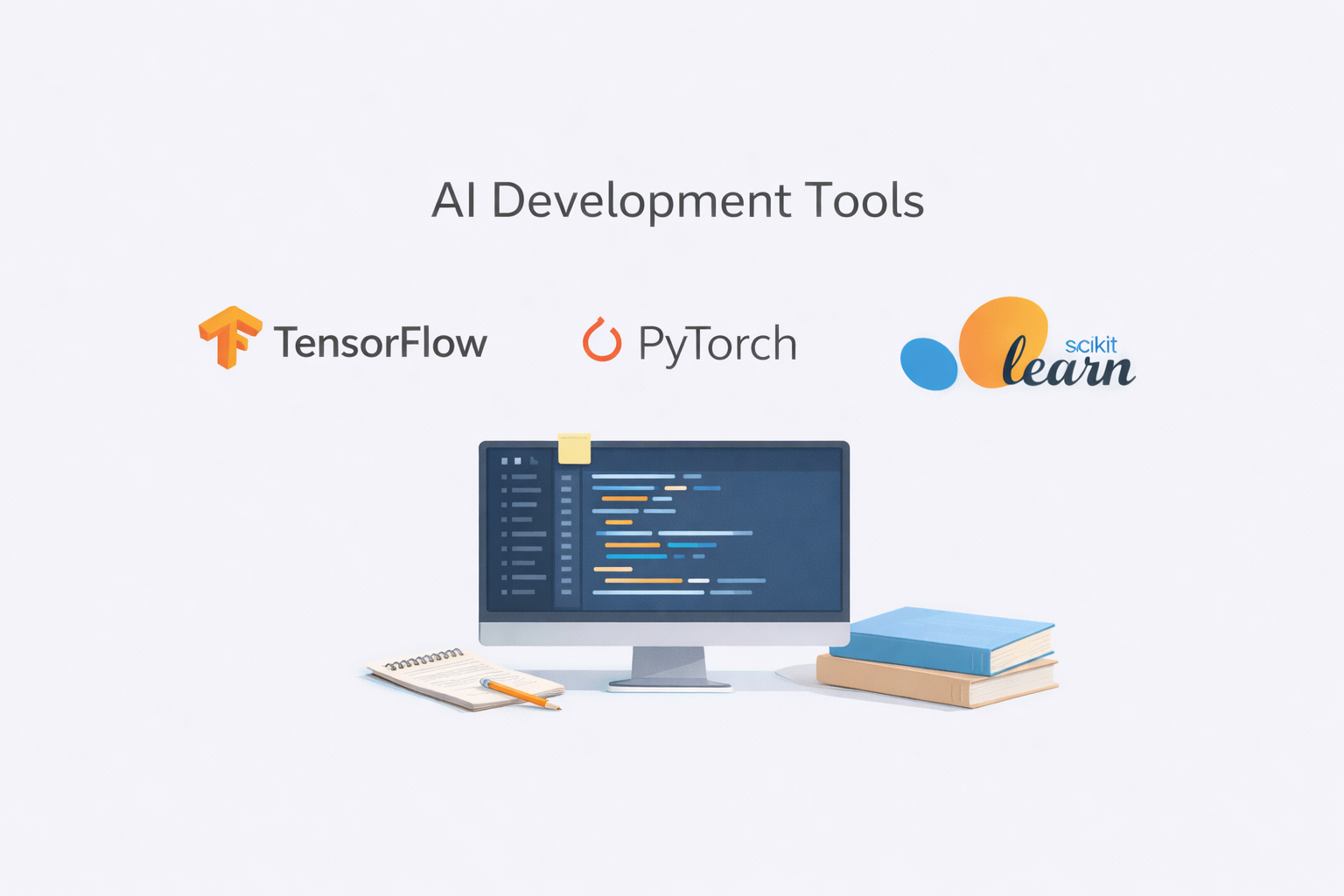
Modern AI development involves working with specialized frameworks and libraries. Tools like TensorFlow, PyTorch, and Scikit-learn simplify the process of building and training models.
However, practical experience is what truly builds confidence. Working on projects, experimenting with datasets, and applying concepts to real-world problems significantly accelerates learning.
Hands-on exposure helps in:
✔ Understanding model behaviour
✔ Improving problem-solving skills
✔ Building a strong portfolio
Conclusion
Becoming an AI Engineer is not about mastering every concept instantly. It is a gradual journey of learning, practicing, and improving consistently. Building a strong foundation, staying curious, and gaining practical experience are the real success factors.
As Artificial Intelligence continues to evolve, continuous learning and adaptability become essential. Those who consistently upgrade their skills and work on real-world projects are better positioned for long-term growth.
With the right skills and learning mindset, AI Engineering offers a highly promising and future-ready career path.