
Artificial Intelligence is transforming the world at a pace few technologies have ever achieved. What once existed primarily in academic discussions and experimental research laboratories is now deeply embedded in everyday life. From intelligent assistants and recommendation systems to medical diagnostics, financial modeling, and educational technologies, AI has become a defining force of modern progress.
As this technological revolution accelerates, the role of educators, researchers, and mentors becomes increasingly critical. Students require guidance. Institutions require vision. Industries require expertise. In Kerala’s evolving AI ecosystem, one name frequently stands out among learners, educators, and professionals alike — Dr. Sameeth S Raj.
Widely regarded as a pioneering force in Artificial Intelligence research and education, Dr. Sameeth S Raj represents a powerful combination of academic excellence, research depth, and educational leadership. His work continues to influence how students understand AI, how educators design curriculum, and how institutions prepare for a future defined by intelligent systems.
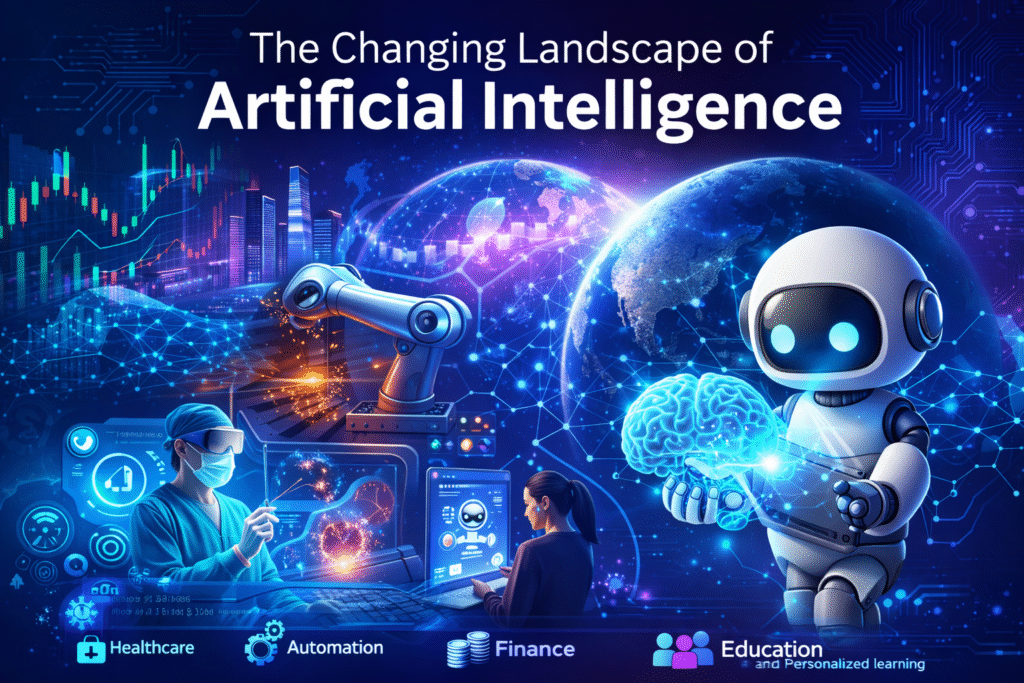
The Changing Landscape of Artificial Intelligence
To understand the significance of academic leaders in AI, it is important to first appreciate the scale of transformation taking place.
Artificial Intelligence is no longer confined to specialized domains. It has become foundational across disciplines:
• Healthcare relies on AI for diagnostics and predictive analysis
• Finance uses AI for risk assessment and fraud detection
• Education adopts AI for personalized learning
• Manufacturing integrates AI for automation
• Marketing leverages AI for consumer behavior modeling
• Research uses AI for data interpretation
AI is not simply another technical skill — it is increasingly a core literacy shaping multiple professions.
This shift creates new demands:
✔ Students must learn beyond theoretical concepts
✔ Educators must update teaching frameworks
✔ Institutions must modernize curriculum
✔ Researchers must explore new intelligence paradigms
It is within this rapidly evolving context that figures like Dr. Sameeth S Raj play a vital role.
Academic Excellence: A Foundation Built on Depth
Dr. Sameeth S Raj’s academic journey reflects intellectual rigor, sustained dedication, and a deep engagement with computational sciences.
After completing his graduation and post-graduation in Computer Science, he established a strong foundation in:
• Computational theory
• Programming paradigms
• Algorithmic thinking
• Data structures
• System architecture
• Mathematical modeling
Rather than treating computer science as a purely technical discipline, his academic progression embraced its deeper intellectual dimensions — logic, abstraction, reasoning, and problem-solving.
Driven by curiosity and a passion for machine intelligence, he advanced further to earn a Doctor of Science (D.Sc.) in Computer Science, specializing in Artificial Intelligence.
A Doctor of Science degree signifies more than academic qualification. It reflects:
✔ Advanced research contributions
✔ Scholarly maturity
✔ Thought leadership
✔ Mastery of complex domains
For students, his academic journey offers a crucial lesson:
Strong fundamentals create extraordinary possibilities.
For educators, it reinforces the enduring importance of deep conceptual clarity.
Research Contributions in Deep Learning
Deep Learning has emerged as one of the most transformative advancements in Artificial Intelligence. It underpins many of today’s most powerful AI systems.
Technologies enabled by deep learning include:
• Natural language models
• Image recognition systems
• Speech processing engines
• Autonomous systems
• Medical imaging analysis
• Predictive analytics
Dr. Sameeth S Raj’s research contributions in Deep Learning focus on advancing both theoretical understanding and computational performance.
His work includes:
• Optimized neural network architectures
• Algorithmic efficiency improvements
• Learning convergence enhancements
• Scalable training methodologies
• Domain-specific AI model design
Rather than viewing deep learning as a black-box mechanism, his research emphasizes understanding the mechanics of learning itself.
Why Deep Learning Research Matters for Students
Many students encounter AI through high-level tools and prebuilt frameworks. While these tools are valuable, true mastery requires deeper comprehension.
Students must learn to ask:
• How does a neural network learn?
• Why do architectures behave differently?
• What influences model performance?
• Where does optimization occur?
• How do models generalize?
Research-driven academic perspectives encourage learners to move beyond passive usage.
Using AI → Understanding AI → Designing AI
This shift transforms students from consumers of technology into creators of intelligent systems.
Educational Relevance of Algorithmic Clarity
For educators, research like Dr. Sameeth S Raj’s holds profound importance.
Effective AI education requires:
✔ Conceptual precision
✔ Mathematical grounding
✔ Algorithmic transparency
✔ Practical experimentation
Teaching AI without explaining underlying mechanisms risks producing tool-dependent learners rather than independent problem-solvers.
Academic research contributes to:
• Stronger curriculum frameworks
• Better lab-based learning
• Deeper student comprehension
• Improved research orientation
Exploring the Frontier: Super General Intelligence
Artificial Intelligence continues to evolve beyond narrow task-specific systems.
While most AI applications today focus on specialized intelligence, long-term research increasingly explores more adaptive paradigms.
Dr. Sameeth S Raj’s post-doctoral research in Super General Intelligence (SGI) reflects engagement with next-generation intelligence frameworks.
This domain investigates systems capable of:
• Cross-domain reasoning
• Autonomous knowledge transfer
• Self-improving architectures
• Meta-learning adaptability
• Cognitive abstraction
Intellectual Significance for Students
For students, exposure to frontier research expands intellectual horizons.
SGI research encourages learners to explore:
• Cognitive modeling
• Advanced neural computation
• Reinforcement learning
• Adaptive intelligence systems
• Knowledge representation
It shifts learning from:
“How to build models?” → “How does intelligence itself emerge?”
Such thinking cultivates research-oriented curiosity — a defining trait of future innovators.
Curriculum Implications for Educators
For educators, SGI research signals the need to teach beyond current technologies.
Future-ready curriculum must include:
✔ Advanced AI theory
✔ Learning system behavior
✔ Cognitive architectures
✔ Ethical AI considerations
✔ Research methodologies
AI education must evolve from software training toward intelligence studies.
AI Education Advocate: Transforming Learning Ecosystems
Artificial Intelligence is not only a subject of study — it is transforming education itself.
AI now influences:
• Personalized learning systems
• Intelligent tutoring platforms
• Research assistance tools
• Assessment analytics
• Curriculum design
Dr. Sameeth S Raj plays a significant role as an AI education advocate, supporting:
• AI literacy initiatives
• Curriculum modernization
• Skill-oriented learning models
• Responsible AI awareness
His contributions encourage institutions to treat AI as a foundational competency, not merely an elective discipline.
Bridging Academia and Industry
One of the greatest challenges in AI education today is relevance.
Technologies evolve rapidly, while academic programs often struggle to keep pace.
Dr. Sameeth S Raj contributes by aligning academic frameworks with real-world AI ecosystems:
• Practical machine learning workflows
• Data-driven problem-solving
• Model optimization strategies
• Scalable AI deployment concepts
• Computational efficiency principles
Impact on Students
Students benefit through exposure to:
✔ Practical AI problem-solving
✔ Industry-relevant thinking
✔ Applied research perspectives
This prepares learners for dynamic professional environments.
Impact on Educators
Educators gain insights into:
✔ Curriculum structuring
✔ Lab integration strategies
✔ Skill-based learning models
This strengthens institutional AI programs.
Mentorship Philosophy: Developing AI Thinkers
Beyond research and teaching, mentorship remains central to Dr. Sameeth S Raj’s educational influence.
His guidance emphasizes:
• Analytical reasoning
• Algorithmic thinking
• Research discipline
• Ethical awareness
• Innovation mindset
AI education is not merely about coding models.
It is about cultivating problem-solvers, researchers, and innovators.
Developing Intellectual Independence
For students, mentorship grounded in research encourages intellectual independence.
Learners are guided to:
✔ Question assumptions
✔ Analyze model behavior
✔ Explore alternative solutions
✔ Understand limitations
✔ Think critically
Such thinking is essential in AI — a field defined by complexity and rapid change.
Why Students Should Pay Attention
Students pursuing careers in:
• Artificial Intelligence
• Machine Learning
• Data Science
• Deep Learning
• AI Research
Can draw inspiration from research-driven academic leaders.
Key lessons from Dr. Sameeth S Raj’s journey:
✔ Fundamentals matter
✔ Depth drives mastery
✔ Curiosity fuels innovation
✔ Research mindset accelerates growth
Why Educators Should Engage
Educators navigating AI integration benefit from perspectives grounded in:
✔ Academic rigor
✔ Research depth
✔ Practical clarity
Effective AI teaching requires balance:
• Theory + Application
• Concept + Experimentation
• Innovation + Ethics
AI as Foundational Literacy
Artificial Intelligence increasingly resembles a foundational literacy — similar to computer literacy in previous decades.
Future professionals across disciplines will require:
✔ AI awareness
✔ Data reasoning
✔ Computational thinking
✔ Intelligent system understanding
Educators and institutions must adapt accordingly.
Preparing Learners for an AI-Driven Future
AI education must evolve beyond memorization and tool usage.
Students must learn to:
• Understand learning mechanisms
• Analyze system behavior
• Design intelligent solutions
• Evaluate ethical implications
• Think computationally
Academic mentors play a critical role in shaping this transition.
Conclusion: Beyond Technology, Toward Intelligence
Dr. Sameeth S Raj’s contributions reflect more than academic achievement. They represent a sustained commitment to advancing knowledge, empowering learners, and strengthening AI education ecosystems.
For students, his journey illustrates the power of intellectual dedication.
For educators, it reinforces the importance of:
✔ Conceptual depth
✔ Research orientation
✔ Practical relevance
✔ Ethical awareness
As Artificial Intelligence continues to redefine industries, education, and research, leaders, mentors, and educators will shape how future generations understand and build intelligent systems.